info@grinpolish.com
+86 18098908025
Follow Us:


2026
Category: Technical Guide | Surface Finishing Solutions

In hardware manufacturing, stainless steel products, bathroom hardware, auto parts, precision machinery and stone processing industries, polishing consumables determine surface finish, production efficiency and overall processing cost.
Many manufacturers face recurring troubles: persistent micro scratches, failure to reach mirror finish, fast wear of buffing wheels, insufficient cutting power or excessive material removal. In most cases, the root cause is mismatched abrasives instead of polishing machines.
Based on practical production experience, we sort out the matching rules for mainstream materials to optimize your polishing workflow.
Stainless Steel (201/304/316, kitchenware, decorative tubes)
Rough grinding: Flap discs, abrasive belts to remove welding spots and burrs.
Intermediate polishing: Non-woven abrasive wheels to erase coarse grinding lines.
Mirror finishing: Cotton buff wheels matched with green or white polishing compound.
Tip: Avoid low-grade iron-containing abrasives, which lead to rust spots on stainless steel surfaces.
Aluminum, Copper, Brass & Soft Non-Ferrous Metals
Soft metals are easy to get deep scratches. Choose fine-grain non-woven wheels, soft buff wheels and mild polishing wax. Reduce working pressure and rotational speed to prevent surface deformation.
Carbon Steel, Alloy Steel, Mold Steel
High hardness allows aluminum oxide flap discs for fast stock removal. Yellow and brown polishing compounds are ideal for matte to bright finish transition.
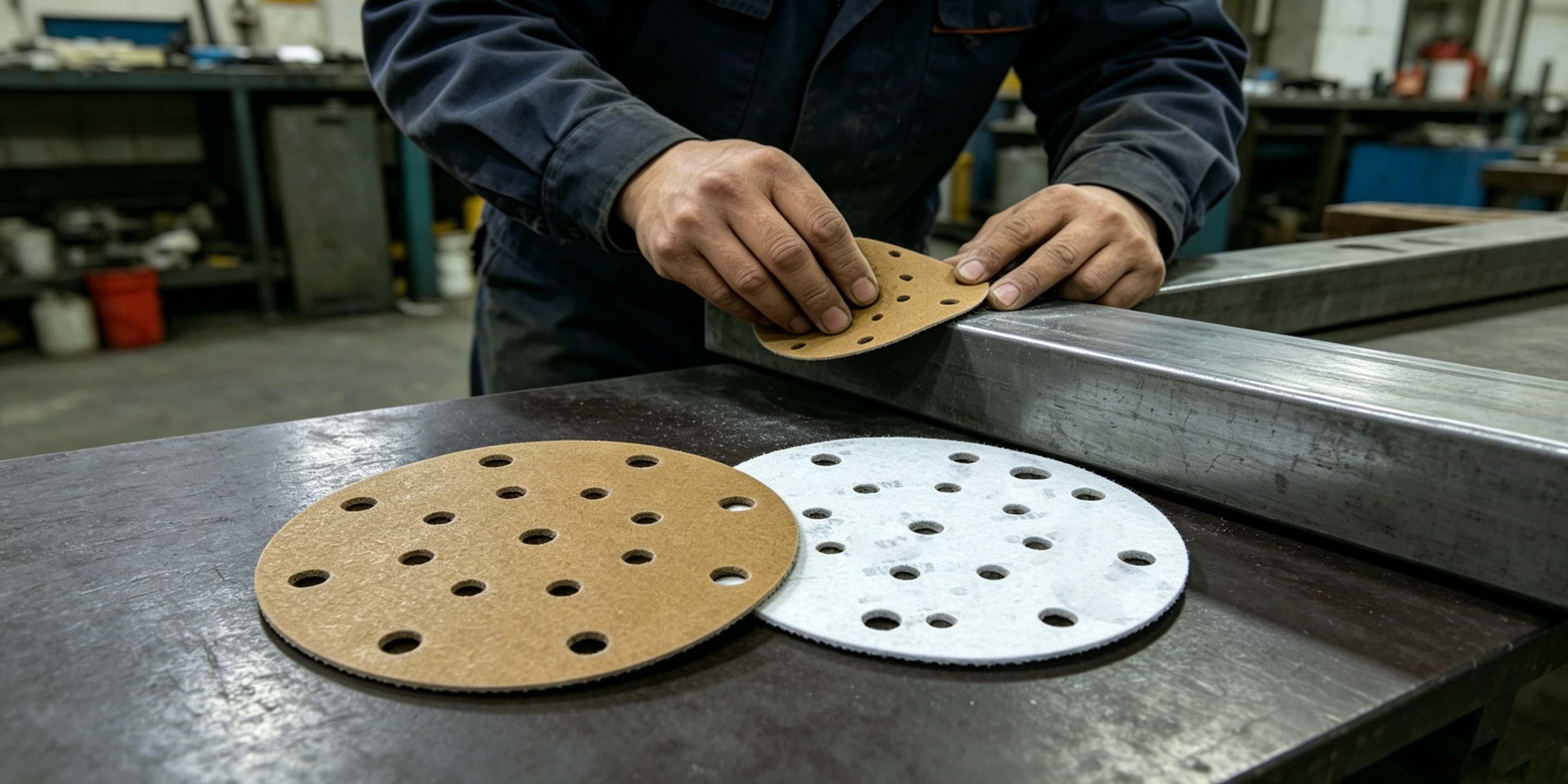
Granite, Quartz, Marble
Use diamond polishing pads in progressive grit sequence (coarse to fine). Never skip grit steps, otherwise permanent scratches will remain.
Glass & Ceramics
Silicon carbide abrasives, PU polishing wheels and cerium oxide polishing media. Elastic polishing tools minimize chipping and surface damage.
Mistake 1: Skip intermediate grits, direct mirror polishing after rough grinding
Deep scratches from rough grinding cannot be eliminated only by fine polishing compound. Standard process: Rough grinding → intermediate sanding → fine polishing → mirror finishing.
Mistake 2: One set of consumables for all workpieces
The same buffing wax or wheel cannot fit stainless steel and aluminum simultaneously. Universal usage causes low efficiency and high reject rate.
Mistake 3: Only focus on unit price, ignore service life
Cheap consumables wear rapidly. Stable abrasives with good self-sharpening performance reduce machine downtime and cut overall production cost.
Proper polishing consumable selection is the most cost-effective way to lower defect rates.
If you struggle with scratches, poor gloss or high abrasive consumption, send us your workpiece material, machine type and target surface roughness. Our engineering team offers free process consultation and sample testing.
We manufacture full-range polishing consumables: flap discs, buff wheels, polishing compounds, diamond pads, non-woven abrasives. Wholesale and OEM customization available. We serve manufacturers in hardware, bathroom, auto parts and stone industries worldwide.